

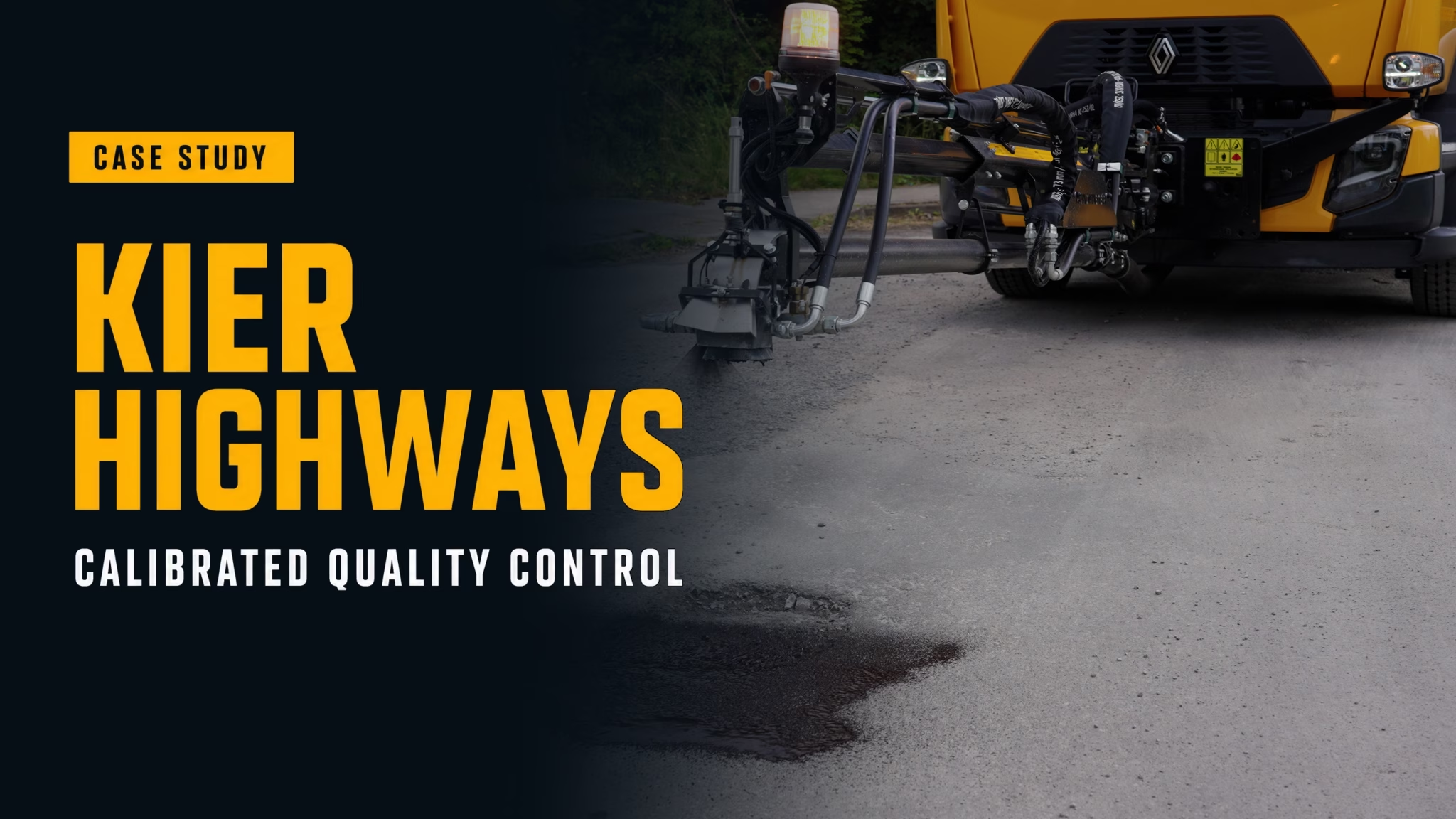
Customer: Kier Highways
Roadmaster fleet: 2 machines
Interviewee: Leon Jolly
The challenge: quality control in a high-volume environment
For a term maintenance contractor, a road-repair method must deliver more than speed. It needs to be repeatable, controllable and dependable across different operators and job conditions. Kier Highways had experience with a previous two-person patching setup and identified overspray and consistency as issues it wanted to improve.
The approach: a computerised and calibrated process
Kier Highways adopted two Roadmasters. The system is designed to control application rates and material ratios through a computerised process, helping operators apply the repair material with greater consistency. The result is a workflow that brings preparation, binder, aggregate and compaction together in one controlled sequence.
The outcome: better control at the point of repair
- Calibrated application: Computerised controls support more consistent material delivery.
- Quality-led maintenance: A controlled process helps operators focus on durable repair quality rather than simply rapid output.
- Reduced overspray concerns: The Roadmaster approach addresses a key limitation identified in the previous setup.
- Efficient deployment: The core repair process can be carried out by one operator from the cab, subject to traffic-management needs.
“Quality control is the key. Everything is computerized and calibrated.�
Leon Jolly, Kier Highways
What contractors can take from this
When a contractor is responsible for meeting service, cost and quality expectations at the same time, the ability to make a consistent repair matters. Roadmaster gives teams a repeatable process that supports output without making quality an afterthought.
Could this work for your contract?
Talk to the Roadmaster team about a spray injection patching programme designed around your contract requirements, repair volumes and operational priorities.