

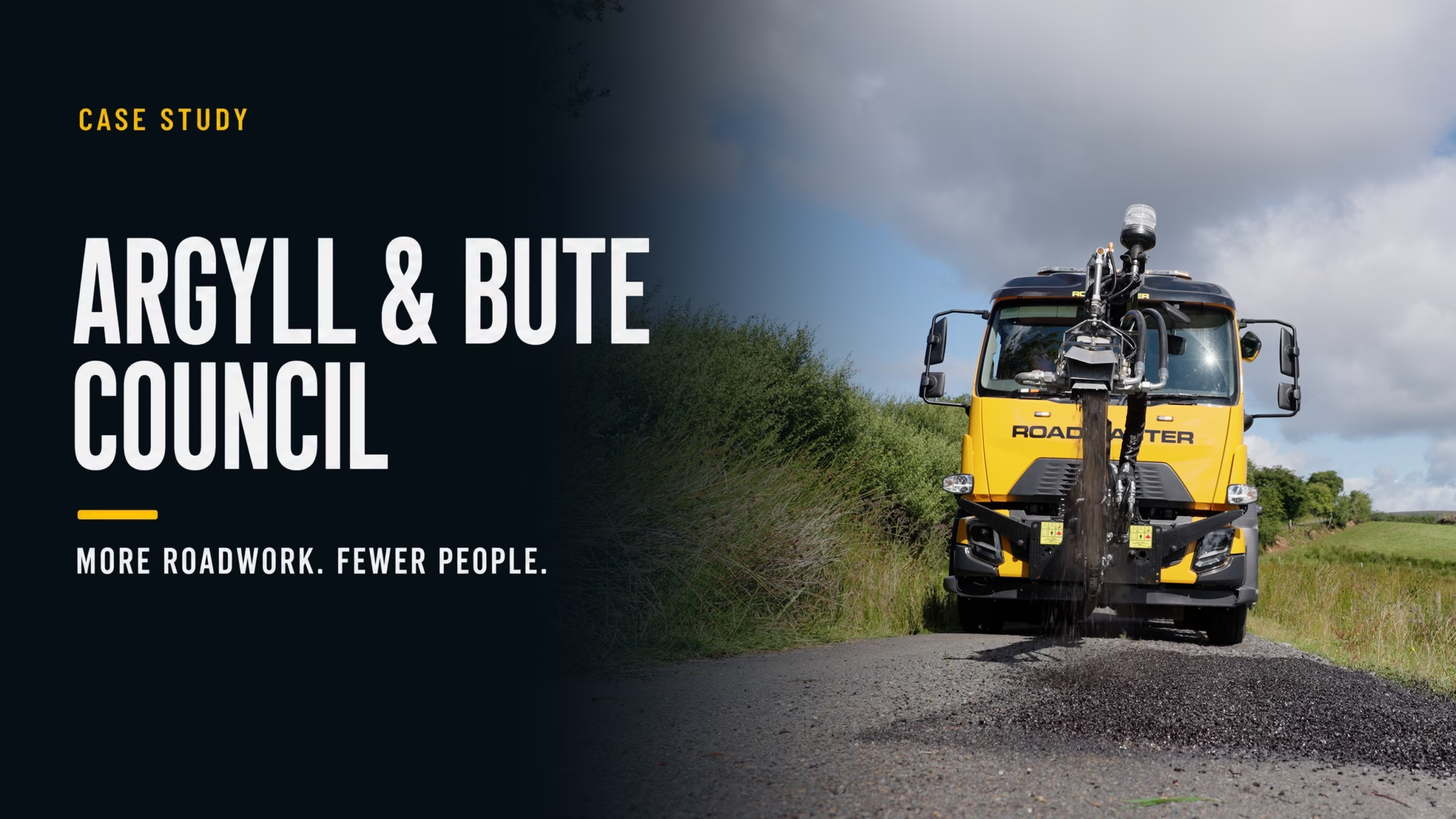
Customer: Argyll & Bute Council
Roadmaster fleet: 4 machines
Interviewee: Julian Green
The challenge: cover more ground with the same team
When road-maintenance resources are limited, every crew assigned to a small reactive repair is unavailable for larger, planned work. For Argyll & Bute Council, the issue was not simply how to fill defects; it was how to maintain the network without stretching people and plant beyond capacity.
The approach: one operator and a controlled repair process
The council operates four Roadmasters. The machine enables the repair process to be completed from the cab by one operator, with a second person added where traffic-management requirements call for it. This contrasts with conventional repair approaches that can require three to five people on a job.
The outcome: capacity returned to the wider programme
- Lean deployment: One Roadmaster operator can undertake the core repair process rather than tying up a larger crew.
- Resources released: Fewer people required on reactive work means more capacity can be directed to larger maintenance jobs.
- Practical network maintenance: The council reports that the machines make an essential contribution to maintaining its roads.
- Durable, repeatable work: A calibrated process supports a consistent repair outcome across the network.
“Couldn’t afford to maintain roads without the Roadmaster.�
Julian Green, Argyll & Bute Council
The wider lesson
For councils facing a constrained labour market and a growing maintenance backlog, productivity is not only about faster work. It is about organising the right people, plant and processes so that routine defects do not consume the capacity needed elsewhere on the network.
Could this work for your network?
Talk to the Roadmaster team about a spray injection patching programme designed around your network, budget and maintenance priorities.