

Every spring, road maintenance teams face the same crisis: a winter’s worth of freeze-thaw damage surfaces at once, the public starts calling, and the pressure is on to fix roads fast.
The problem isn’t just the potholes. It’s the way we respond to them — and the cycle that reactive response creates.
The real cost of a pothole
A pothole doesn’t just cost money to repair. It costs money to fail to prevent. The UK’s ALARM Survey reported £34.3 million paid in pothole-related compensation claims in 2024/25. The road repair backlog now stands at £18.62 billion, and the average resurfacing frequency across all road types has slipped to once every 97 years. These are not the signs of a system that is winning.
Why reactive repair is a budget trap
When a pothole reaches the point of emergency repair, several things are already true:
- The damage is more extensive than it needed to be — a crack treated early costs a fraction of the formed pothole.
- Emergency mobilisation costs more than scheduled work.
- The repair will fail faster — average emergency fix lifespan is 3–4 months.
- The compensation liability clock has started ticking.
The reactive cycle is expensive at every stage. And it compounds: failed repairs become more failed repairs, eating budget that should be going toward prevention.
The catch-up problem — and why it’s solvable
Many councils feel trapped: they’re so far behind on reactive repairs that prevention feels like a luxury they can’t afford. This is the wrong framing. The Roadmaster spray injection patcher addresses both simultaneously. It clears the reactive backlog faster, more durably, and at a fraction of the per-repair cost of traditional methods. Repairs that were being revisited 3–4 times per year now hold for 12 months or more. As the backlog clears, capacity opens for preventative work — sealing cracks before they become potholes, strengthening edges before they fail.
“By the time the pothole forms, you’ve already failed. The signs were there weeks, if not months, before. That’s the time to go in with the spray injection patcher.”
— Donal McNamee, Founder, Roadmaster
The snowball effect
In year one, the Roadmaster is doing reactive and preventative work simultaneously — clearing the backlog while treating the earliest defects preventatively. In year two, roads treated preventatively in year one don’t reappear as potholes. The reactive workload falls. More capacity opens for prevention. By year three and four, the cost per mile maintained is falling — not because you’re doing less, but because you’re intervening at the moment when it costs least. The savings compound year on year.
What progressive councils are doing
Cork County Council manages 12,000km of road in the bottom 5% of national funding. They run 22 Roadmaster spray injection patchers. Their approach: treat surfaces early, continuously, before defects develop. Their result: repairs that last 12+ months instead of 3, at a fifth of the cost. “Once you look at the numbers, velocity patching is a no-brainer.”
The first step
The shift from reactive to preventative doesn’t happen overnight. But it starts with understanding the full cost of your current approach. Measure:
- How many sites do you return to within 12 months?
- What percentage of your maintenance budget is consumed by emergency callouts?
- How much have you paid in pothole-related compensation claims in the past three years?
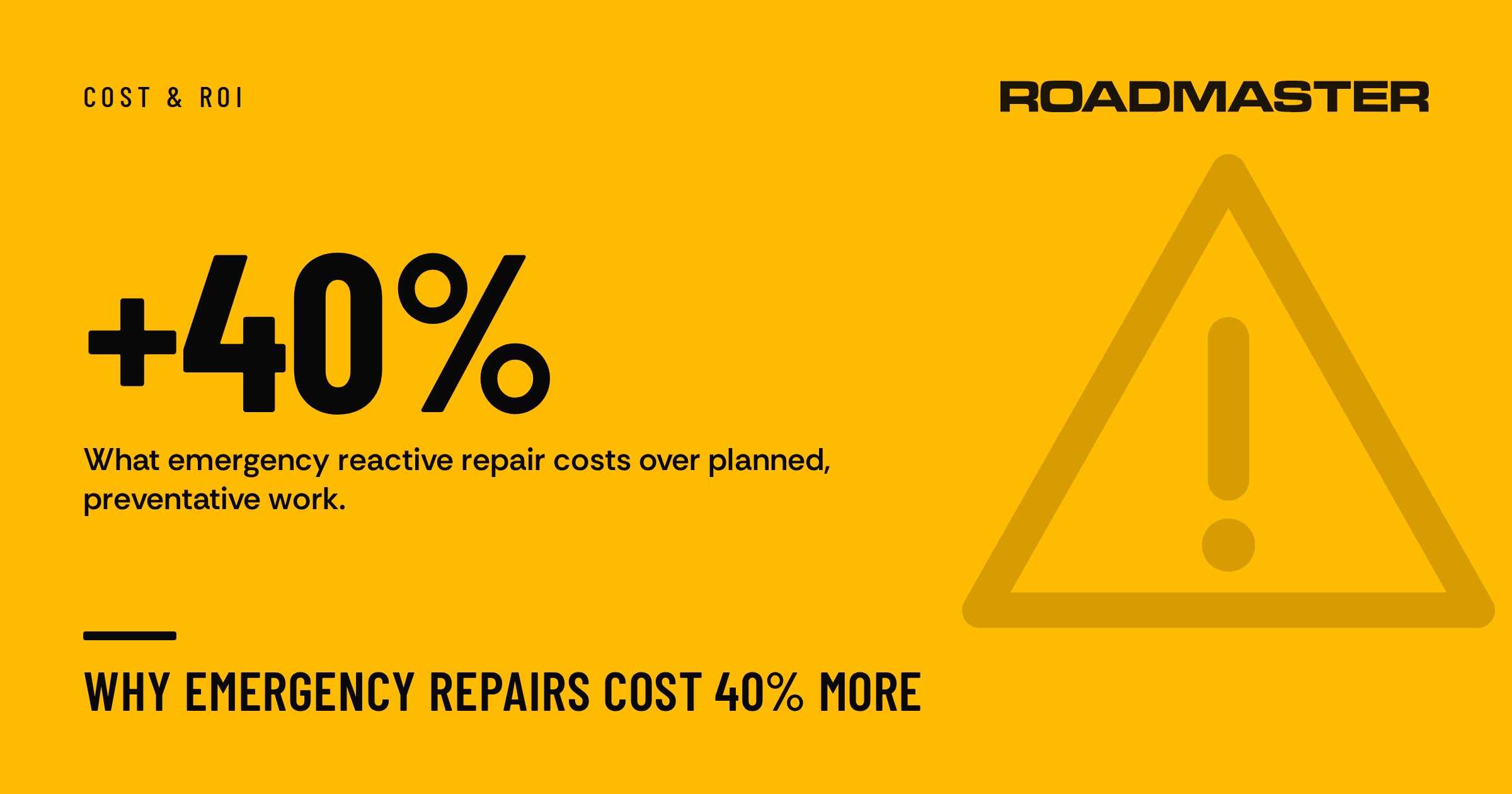
Those numbers, set against the cost of a Roadmaster programme, make the investment case. Emergency repairs costing 40% more than planned work is not a fixed cost of road maintenance. It’s a choice — and progressive councils are choosing differently.
Roadmaster designs and manufactures single-operator spray injection patchers used by councils and contractors across Ireland, the UK, and Europe.