

Most roads engineers who have seen spray injection patching in action reach the same conclusion fairly quickly: this is better than what we’re doing.
The repair is faster. It holds longer. It costs less per fix. The operator stays in the cab. The data captures itself. The logic is not difficult.
What is difficult — consistently, across authorities of every size and budget profile — is translating that conclusion into an approved capital expenditure. The machine costs money upfront. That money has to come from somewhere. Someone has to approve it. And the people who approve it have different questions than the people who operate the roads.
This is a guide to building a business case that works for both audiences.
Start with the number that stops the conversation about purchase price
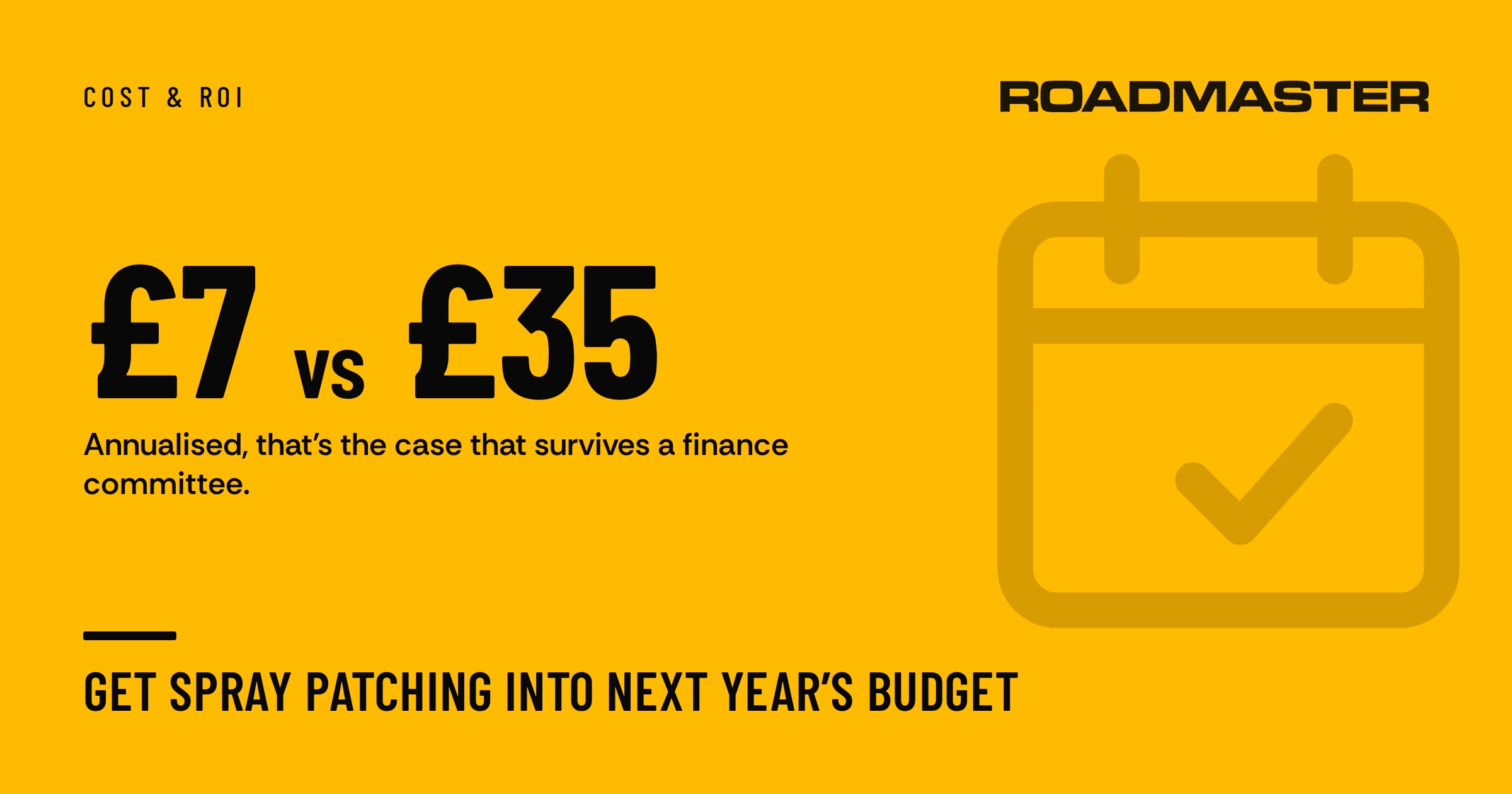
Before you present a single line about what the machine costs to buy, establish what the current approach costs to run. The most useful single figure in any spray injection patching business case is the annualised cost per repair site comparison.
Traditional repair: approximately £35 per repair, lasting three to four months. Annualised for a site that requires three to four visits per year: £105–£140. Spray injection patching: approximately £7 per repair, lasting twelve months or more. Annualised: £7.
The difference — £98 to £133 per site per year — is the recurring saving. Multiply that by the number of active defect sites on your network that require attention more than once per year, and you have the annual operational saving before you have mentioned the purchase price once. This reframes the conversation. The question stops being “can we afford the machine?” and becomes “can we afford not to have it?”
Build the whole-life cost model
A purchase price comparison is the wrong frame for capital equipment evaluation. The correct frame is whole-life cost: everything the machine costs and saves over its operational lifespan, compared to the alternative. For a spray injection patcher, the key whole-life factors are:
- Labour. At £35,000 per year in salary and on-costs per additional operator, a two-man machine costs £350,000 more in labour over ten years than a single-operator alternative. This figure alone often recovers the price premium of a higher-quality single-operator machine before year five.
- Repair frequency. A repair that holds for twelve months requires one intervention per year at a given site. A repair that holds for three months requires four. The difference in mobilisation cost, material, fuel, and operator time across a network of hundreds of sites is substantial — and it compounds every year.
- Machine lifespan. A Roadmaster machine is expected to operate for fifteen to twenty years with proper maintenance, with a full strip-and-rebuild option at approximately year five. A ten-year machine evaluated against a fifteen or twenty-year machine on purchase price alone is being compared on the wrong metric.
- Emergency repair premium. Reactive emergency repairs cost up to 40% more than planned preventative work. A programme that progressively shifts workload from reactive to planned captures this premium in avoided cost every year.
Use independent data, not supplier claims
A business case built on manufacturer claims is inherently less persuasive than one built on independently verified data. Several robust independent sources exist.
Meath Co Council (Ireland) conducted an independent trial in 2024 comparing manual labour and spray injection patching on the same road network. Spray patching was 79% cheaper per tonne laid, annualised over repair lifespan, and produced 75% less carbon annualised.
The AIA ALARM Survey documents the UK road repair backlog at £18.62 billion, an average resurfacing frequency of once every 97 years, and £34.3 million paid in pothole-related compensation claims in 2024/25.
Volker Highways (2023) documented a 96% carbon reduction for spray injection patching versus hand-lay repair methods.
These figures are sourced, verifiable, and not produced by any equipment manufacturer. Cite them with full attribution and your finance committee cannot dismiss them as marketing material.
Anticipate the four objections
- “The upfront cost is too high.” Present the whole-life cost model. Ask for the comparison against the ten-year cost of continuing the current programme. The purchase price objection almost always dissolves when set against the full cost picture.
- “We don’t have the budget this year.” Ask what this year’s reactive repair overspend looks like. Emergency repairs at a 40% premium are already consuming capital that a preventative programme would not need.
- “How do we know the repairs will last?” Independent trial data, and testimonials from authorities with similar road profiles. Cork County Council and Tipperary County Council have been running Roadmasters for more than a decade.
- “What happens when it breaks?” Parts: same-day dispatch from stock via the online portal. Annual inspection: the manufacturer sends a fitter to your site every winter. Machine lifespan: fifteen to twenty years. Cork County Council is running machines from 2006.
The Cork County Council model
John Tobin, Plant Stores Superintendent at Cork County Council, was part of the machinery yard engineering team involved in the purchasing process. Rather than a single large acquisition, the approach was phased, with an initial unit evaluated alongside existing operations and comparative performance data developed internally to support subsequent purchasing decisions.
“You need to get the senior management and the area engineers all on board,” he says. “Train everyone from senior management down to operators.”
The data did the work. The council approved the next machine. Then the next. Fortheen years later, in 2026 , twenty-two Roadmasters operate across Cork’s 12,000-kilometre road network. The path from one approved machine to a fleet programme runs through the same place every time: evidence from your own network, collected over time, presented clearly.
Roadmaster provides whole-life cost modelling support and business case templates for councils and contractors.